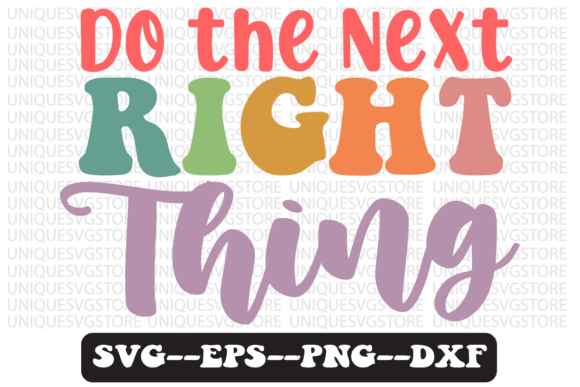
Do the Next Right Thing Retro Svg Design Review
I have spent years reviewing machine embroidery design files, sifting through thousands of digital assets to find those that actually hold up under the needle. Too often, a graphic looks perfect on a screen but falls apart in real life, resulting in puckered fabric or lost details. When I first encountered the Do the Next Right Thing Retro Svg Design, I didn't just see a pretty image; I saw a potential bestseller for a boutique shop or a meaningful gift for a family member. As an experienced designer and reviewer, I put this piece through a mental simulation of actual production to see if it delivers on its promise as a versatile embroidery file.
The First Impression: Mood and Visual Personality
The immediate feeling this design gives off is one of grounded optimism wrapped in nostalgia. The retro aesthetic suggests a groovy era, yet the message remains timeless and practical. Unlike many trendy designs that feel fleeting, the typography and layout of Do the Next Right Thing Retro Svg Design possess a stability that translates well to stitch. It feels like something you would want stitched onto a durable canvas rather than a delicate silk scarf.
The visual personality is bold and confident. For a craft business owner or Etsy seller, this matters because the design needs to communicate value instantly. Whether used on a tote bag or a sweatshirt, the retro vibe creates an instant connection with customers who appreciate handmade goods with character. It isn't just a quote; it is a statement piece that adds depth to a custom apparel line without needing excessive embellishment.
Real-World Application: A Case Study in Production
To truly understand how this design performs, let's imagine a specific scenario. I am preparing a collection of holiday gifts for a local boutique. The goal is to create a series of personalized aprons and kitchen towels for home cooks. I pull up Do the Next Right Thing Retro Svg Design in my digitizing software. The first thing I notice is the balance between the text and the graphical elements.
On a heavy-duty cotton canvas apron, this design shines. The retro curves allow the thread to flow naturally, creating a tactile experience that machine-printed graphics simply cannot match. I visualize the finished product hanging in a shop window: the soft sheen of the satin stitches catching the light against the matte fabric of the apron. It elevates a simple kitchen towel into a cherished keepsake. Similarly, when applied to a baby onesie, the gentle curves of the retro font feel safe and welcoming, making it a perfect choice for baby embroidery projects where safety and softness are paramount.
However, the versatility extends beyond textiles. I also considered using this as a tote bag design for a craft fair booth. The design's layout allows for a centered placement that looks professional even on smaller bags. If I were to use it on a wall art pillow cover, the contrast between the stitching and the fabric texture would add a layer of sophistication that appeals to buyers looking for unique home decor. The design works because it doesn't rely on tiny, intricate details that get lost in the weave of the fabric.
Performance Across Different Garments and Surfaces
When evaluating this design for commercial use, we must consider the range of items mentioned in the product description, such as hoodies, tank tops, and mugs. While the source file is labeled as an SVG suitable for print, converting it for commercial embroidery requires careful consideration of stitch types.
- Sweatshirts and Hoodies: These thick fabrics require a robust underlay. The retro style of Do the Next Right Thing Retro Svg Design benefits from a slight fill density to ensure the letters pop off the fleece. It avoids the "flat" look that plagues poorly digitized designs on bulky materials.
- Tank Tops and Long Sleeve Tees: On lighter knits, the design needs to be scaled appropriately. The retro curves prevent the thread from pulling the fabric too much, provided the stabilizer is chosen correctly. This makes it an excellent candidate for apparel decorators building a cohesive brand identity.
- Hats and Caps: Embroidering on curved surfaces is tricky. If the design includes small lettering or sharp corners, it might distort on a baseball cap. However, the flowing nature of this specific retro design suggests it could work well on a flat front panel of a cap, offering a clean, professional finish.
Where to Exercise Caution
No design is universally perfect, and honest review requires pointing out potential pitfalls. There are specific situations where Do the Next Right Thing Retro Svg Design might struggle if not handled with care. For instance, if you attempt to stitch this on a very small hoop size, the retro curves might lose their definition, turning into a blob of thread. Always check your hoop size limitations before finalizing the order.
Textured fabrics, such as boucle or heavy corduroy, can hide the fine details of the design. In these cases, the thread might sink into the fabric pile, reducing the visual impact. Similarly, stretchy fabrics like jersey require a high-quality cut-away stabilizer to prevent the design from distorting during wear and washing. If you are working with dark fabric, the thread color selection becomes critical. A standard white thread might not provide enough contrast for the retro lines to stand out, so you may need to experiment with metallic or neon threads to capture the true spirit of the design.
Dense stitch areas can sometimes cause issues on thin fabrics, leading to puckering. If the design features large blocks of fill stitch, you must ensure the fabric has enough body to support it. For embroidered patches, the edges need to be clean; if the design relies on long running stitches near the border, they might fray over time unless trimmed and sealed properly.
Practical Notes for the Designer
Before committing to a full production run, I strongly advise testing the design on scrap fabric first. This simple step can save hours of frustration. Check the thread color contrast against your intended background; what looks good on a monitor might wash out on a navy blue shirt. Review the stitch density to ensure it isn't too heavy for the fabric weight you are using.
Inspect small details closely. Sometimes, vector paths that look smooth on a screen become jagged when converted to stitches. Test the design in black and white mockups to see how the shapes read without the distraction of color. Compare light and dark fabric backgrounds to ensure the design maintains its integrity across different products.
Don't forget the technical side: use proper stabilizer for the specific material, whether it is tear-away for stable wovens or cut-away for knits. Confirm whether the license allows for both personal and commercial projects, especially if you plan to sell finished items on platforms like Etsy. If the product listing mentions "Graphics" and "Crafts," verify the exact file formats available to ensure compatibility with your embroidery machine software.
Final Verdict on Value and Appeal
In conclusion, Do the Next Right Thing Retro Svg Design offers a strong foundation for a variety of handmade products. Its retro charm combined with a motivational message gives it a broad appeal that fits well in modern boutiques and online shops. It enhances brand consistency by adding a touch of vintage professionalism to any item it adorns.
For the creative entrepreneur, this design asset is more than just a download; it is a tool to build trust with customers. A well-executed embroidery project signals quality and care. By paying attention to the nuances of fabric, stabilizer, and thread, you can transform this digital file into a tangible, high-value product. Whether it ends up on a nursery wall, a holiday gift, or a custom tote bag, the design holds the potential to delight users and elevate your craft business.